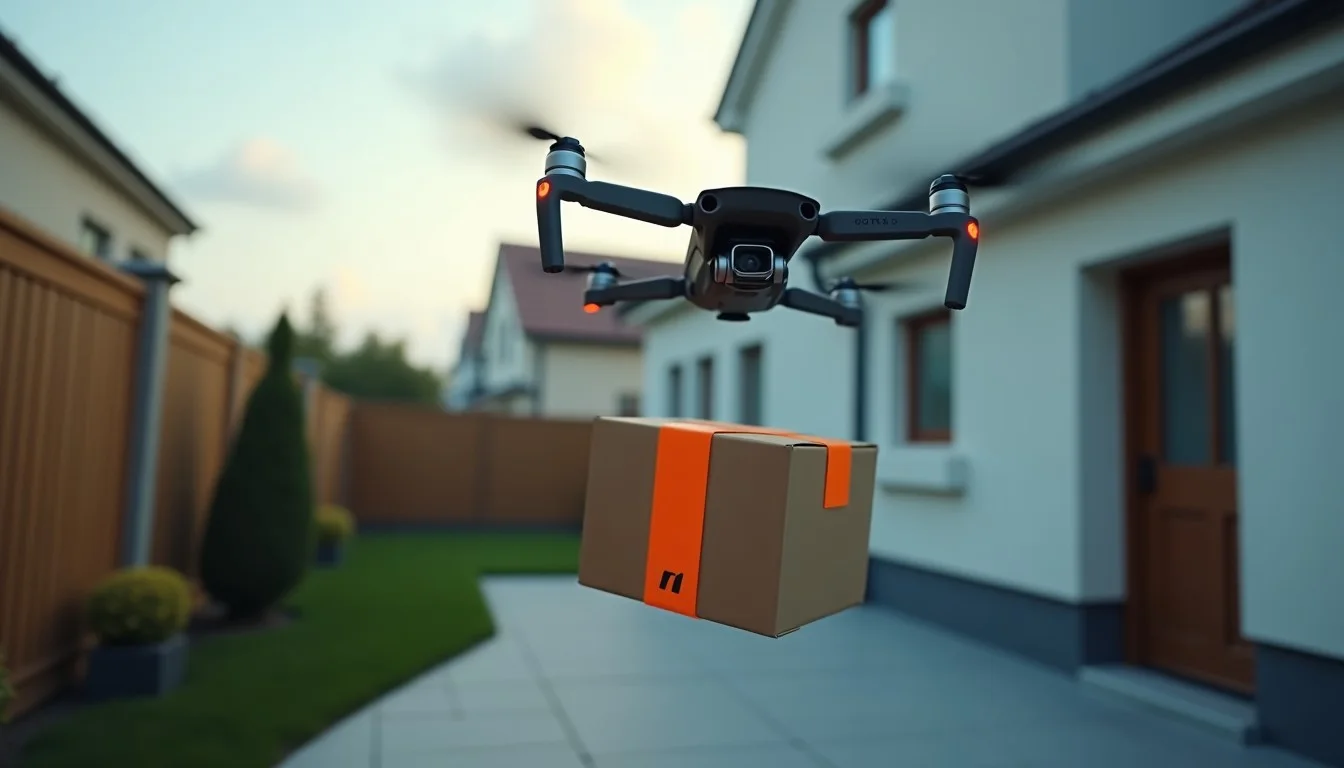
Federal aviation rules treat a dropped package as a hazard problem. Several state aeronautics codes still treat it as a permit problem, or a crime.
On September 20, 2026, DroneXL published a sweep of state aircraft-drop statutes in every state with a live or announced drone-delivery program. Ten of those codes go further than the FAA. Three require a state permit or written consents before anything leaves an aircraft. Six make a drop over a densely inhabited area or a public gathering a misdemeanor with no permit path. Michigan layers a local-government permission rule on a criminal endangerment statute.
Amazon Prime Air is the operator that makes the text bite. FAA environmental filings describe the MK30 descending to about 13 feet AGL, hovering, and releasing the package. Wing lowers a package on a tether. Zipline winches a droid down from several hundred feet. Of the three Part 135 delivery fleets in current U.S. service, only Amazon's method matches the old statutes' verb: drop.
No published court opinion has applied those statutes to a certificated delivery drone. This briefing maps the federal rule, the ten state texts, and the Part 107 jobs that use the same verbs.
What the federal rules actually say
14 CFR 107.23(b) bans allowing an object to be dropped from a small unmanned aircraft in a manner that creates an undue hazard to persons or property. That is a performance standard, not a permit. 14 CFR 91.15 uses the same idea for aircraft that are not small UAS. Amazon flies the MK30 as a Part 135 air carrier. Drones are aircraft under 49 U.S.C. 44801, so state aeronautics codes written for barnstormers have a textual hook.
The ten states that go past the FAA
Permit or written-consent states:
- Illinois: 620 ILCS 5/43b requires an IDOT dropping permit. 92 Ill. Adm. Code 14.440 wants the form 14 days ahead with person, date, time, place, and object. 620 ILCS 5/79 makes a violation a Class A misdemeanor. FAA review lists three Chicago-area hubs at Markham, Matteson, and West Chicago.
- Minnesota: Minn. Stat. 360.075 requires written consents from the transportation commissioner and from the municipality or property owner where objects may land. No delivery operator is flying it yet.
- Oregon: ORS 837.085 requires a permit from the state aviation director. Amazon asked Portland to review a Prime Air hub at its Schmeer Road warehouse for an early-2027 target.
Populated-area misdemeanor states: Arizona A.R.S. 28-8279 (Tolleson already operating); North Carolina G.S. 63-18; Hawaii HRS 263-9; Delaware Code title 2 section 309; New Jersey (per the Sept. 20 sweep); Missouri RSMo 305.080 (Kansas City, Missouri is on Amazon's hub list).
Michigan: MCL 750.44 plus Aeronautics Commission rule R 259.308 (written permission from the political subdivision). Detroit-area authorizations cover Hazel Park, Wixom, Pontiac, and Detroit.
Twenty-one reviewed states have no general drop rule beyond careless-or-reckless operation, including Texas, Florida, Alabama, Georgia, Louisiana, Ohio, and California. Local land-use, event buffers, and critical-infrastructure maps still apply there.
Preemption points both ways
The July 14, 2023 FAA/DOT UAS fact sheet says the FAA owns aviation safety and airspace efficiency, and that laws aimed at commercial delivery drones are more likely to be preempted under the Airline Deregulation Act. Amazon can make that Part 135 argument. A Part 107 contractor cannot borrow it as a preflight clearance. The same sheet says restrictions on how a UAS is used, as opposed to where it flies, are more likely to survive. Singer v. City of Newton (D. Mass. 2017) did not decide a statewide aircraft-drop misdemeanor.
Part 107 checklist
- Name the object and the method: drop, lower on a line, land and place, or hand off.
- Read the state aeronautics code, not only B4UFLY or LAANC.
- In IL, MN, and OR, ask the state aviation office in writing whether a Part 107 payload release needs the aircraft-drop permit. In Michigan, ask the city or township.
- Do not treat Amazon's ADA argument as your clearance.
- Watch populated-area and public-gathering verbs; stack Arizona's ticketed-event ban on 28-8279 when the site is a stadium or festival.
- Keep 107.23(b) and the 107.9 report clock even in states with no drop statute.
Contractors bidding payload work in Illinois, Oregon, Arizona, Michigan, Missouri, or Minnesota should put the statute citation in the proposal assumptions. Customers who want a free-fall drop in those states need to own the permit question in writing.
Sources: DroneXL Sept. 20, 2026; 14 CFR 107.23 and 91.15; FAA/DOT UAS Fact Sheet July 14, 2023; 620 ILCS 5/43b and 5/79; Minn. Stat. 360.075; ORS 837.085; A.R.S. 28-8279; FAA Chicago Prime Air draft EA; Illinois DNR IFC2026009.