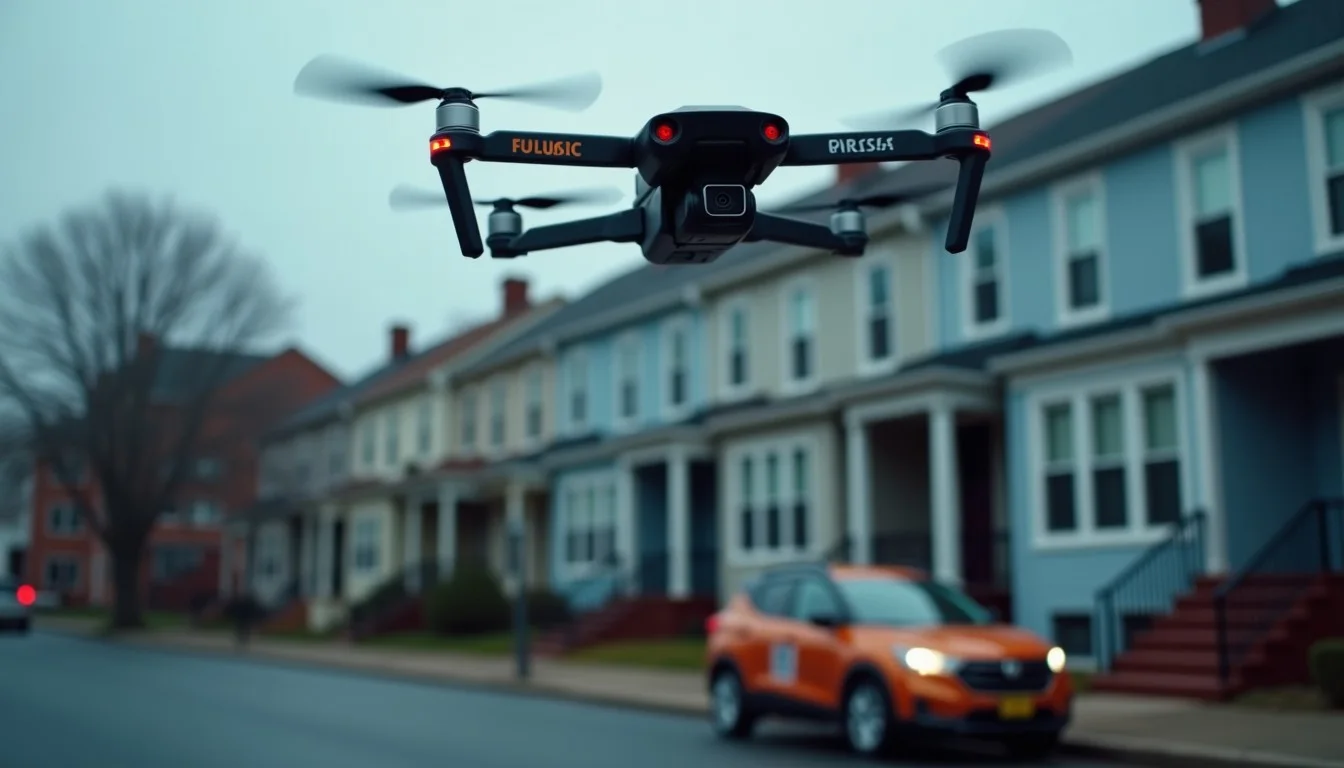
A Boston Police Department drone came down on a privately owned car in Brighton on Thursday, September 3, 2026, six days after the department told the city it was putting Drone as First Responder aircraft into the air.
The Boston Herald, citing a police report, placed the crash at about 1:30 p.m. at 11 Hatherly Road. An officer arriving on scene found the aircraft in pieces in the driveway. It had struck a Mazda 3 registered to a 42-year-old resident who was not home. The report described damage to the rear windshield and the trunk. The officer left a note on the windshield. BRINC, the manufacturer partnered with BPD on the pilot, collected the wreckage.
That is the entire official picture released so far. No public FAA docket entry was located that names this event. No charging document names a remote pilot. No department statement published with the Herald story assigned a cause.
On August 28-29 the department announced a DFR pilot with Motorola Solutions and BRINC. Commissioner Michael Cox said drones would launch within seconds of a 911 call or ShotSpotter activation, with eyes on a scene in as little as a minute. Aircraft would wear BPD markings, carry sirens and emergency lights, and keep cameras pointed down at street level on arrival. Operations were to be flown by BPD members who are certified pilots, starting the last weekend of August.
The first documented property-damage event arrived before the program was a week old.
The 14 CFR 107.9 clock
If the flight was conducted under Part 107, the remote pilot in command must report to the FAA no later than 10 calendar days after an operation that involves serious injury or loss of consciousness, or damage to any property other than the small unmanned aircraft unless repair cost or fair market value is $500 or less. Hull loss on the drone itself does not trip the rule. A smashed rear windshield and trunk on a late-model compact almost certainly does unless a documented estimate comes in under the threshold.
Reports go through FAADroneZone. BPD publicly emphasized certified pilots, which is how departments usually keep DFR inside Part 107, but that is not a published determination for this flight. No source confirmed whether a report was filed.
What DFR contractors should put in the CONOPS
Hatherly Road is houses and parked cars, not a closed range. A one-minute response promise still needs a written lost-link profile, a named PIC on dock launch, a driveway-overflight risk line, a property-damage pay path, log retention after the vendor collects wreckage, and an honest answer on whether a flight-termination system is armed. Contractors bidding dock siting, training, or overflow air support should treat those as bid requirements.
Brighton sits under the Boston Logan Class B shelf. A police livery does not create right-of-way against a Part 107 inspection crew and does not appear in B4UFLY as a moving NOTAM. Standing LAANC for the Logan surface and shelf is the working habit.
This incident does not prove DFR is unworkable, name an airframe defect, or establish a Part 107 violation. It does show a week-old public-safety program can generate a reportable-looking property event on a residential street.
Sources
- https://www.bostonherald.com/2026/09/09/boston-police-drone-destroyed-a-car-in-brighton-crash-days-after-bpd-touted-the-new-techs-safety/
- https://www.bostonherald.com/2026/08/29/police-blotter-boston-police-to-pilot-drone-first-responder-program/
- https://hoodline.com/2026/09/brighton-man-s-mazda-damaged-by-boston-police-drone-days-after-safety-pitch/
- https://www.ecfr.gov/current/title-14/chapter-I/subchapter-F/part-107/subpart-A/section-107.9
- https://www.faa.gov/newsroom/small-unmanned-aircraft-systems-uas-regulations-part-107