 Robert Rahm |
November 7, 2026
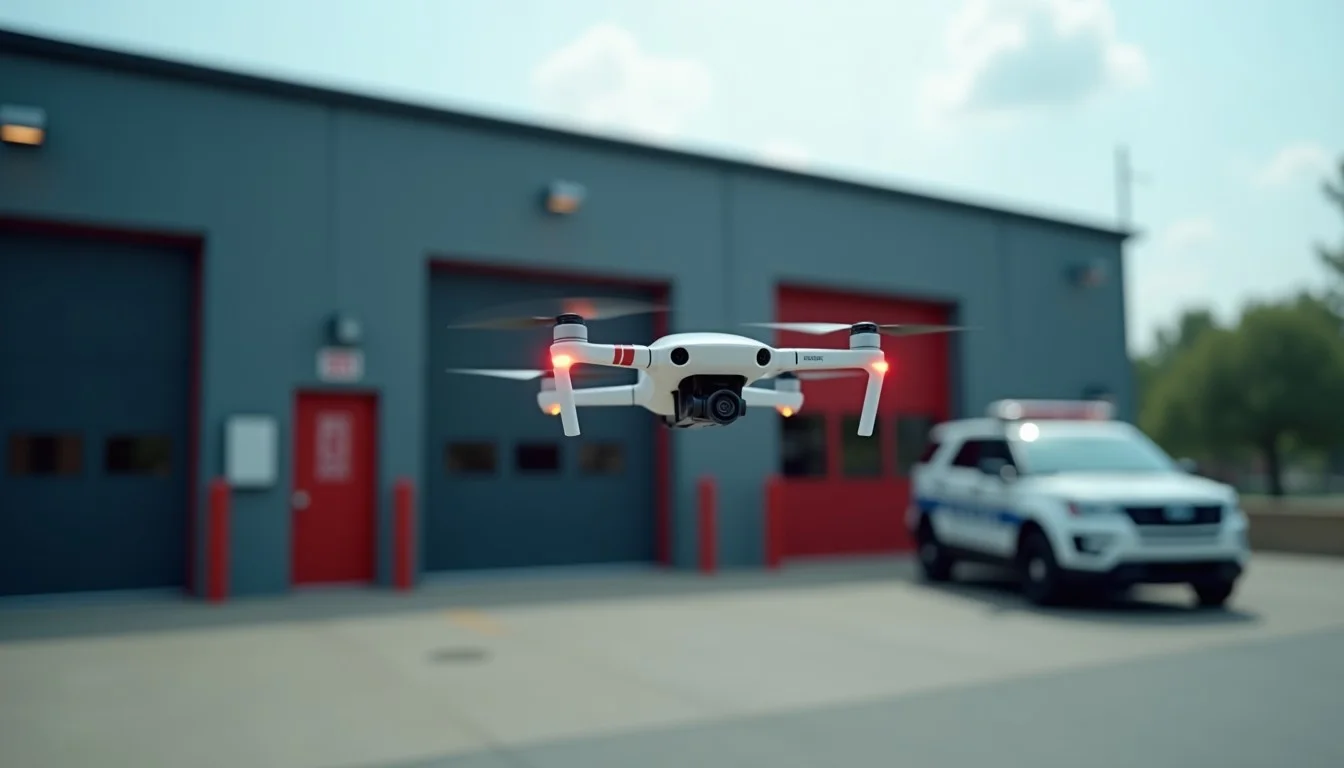
Chattanooga Police Department’s Drone as First Responder pilot has produced concrete numbers after roughly six weeks of operation. As of October 9, 2026, the department’s public dashboard showed two prepositioned drones had flown 997 times since the late-August start, including test flights. The aircraft arrived first on 188 of those deployments. In 41 cases—about 4 percent—the drone was the only police unit needed to handle the call.
Department spokesperson Heather Holley described the solo resolutions as typically non-emergencies or situations where the drone corrected bad information. One example she gave was a report of roadway debris that turned out to be off the pavement in the median. “The program is operating well but that it is still too early to judge its full impact,” Holley said.
The two platforms are Brinc Responder drones with automated docks, both NDAA-compliant American-made systems. They sit at Chattanooga Fire Department Station 4 (2181 Curtis Street) and Station 9 (3250 8th Avenue). Locations were chosen using crime data that identified violent-crime hotspots. Docks are trailer-mounted so the department can relocate them if needed. The FAA has authorized operations within a three-mile radius of each dock under a Certificate of Authorization (COA). Trained operators launch the aircraft from the department’s Real Time Intelligence Center on 911 or police-generated calls. Live video goes to responding officers, operators, and incident commanders. The drone stays until the scene is stabilized, then returns.
CPD policy bars routine patrol or general surveillance. Every deployment is mapped on the public dashboard with flight paths, duration, call type, and timestamps. Data retention follows the same rules as body-worn and in-car cameras. The program does not use facial recognition or weaponization. Tennessee law (TCA 4-56-112) already restricts new purchases of certain foreign-made drones; the Brinc units meet that requirement. The broader CPD UAS unit, started in 2022 with four operators and nine aircraft, now has 13 certified operators and 21 platforms. In 2025 the unit responded to more than 200 calls. DFR operations themselves began in February 2026 after state grant funding and training that started in late April.
For Part 107 commercial pilots, the Chattanooga results illustrate why agencies are expanding DFR programs. Public-safety organizations can operate under Part 91 public-aircraft rules or a COA/Part 91.113 waiver that permits certain beyond-visual-line-of-sight flights without a dedicated visual observer. Many agencies still use Part 107-certified pilots for training and support roles. The three-mile COA radius, dock-based launches, and public transparency requirements create defined operational envelopes that commercial operators must respect when working nearby or under contract.
The early 4 percent solo-clear rate is modest but shows drones can absorb some low-acuity workload. As more departments adopt similar NDAA-compliant dock systems and publish dashboards, demand for trained pilots, maintenance support, and integration services is likely to grow. Operators interested in this sector should review the FAA Public Safety Toolkit, confirm any local COA or waiver boundaries before flying near active scenes, and track state procurement rules that favor domestic platforms.
Sources: Chattanooga.gov Drone as First Responder page; HERE Chattanooga / Times Free Press reporting (October 13, 2026); CPD press materials (August 2026).