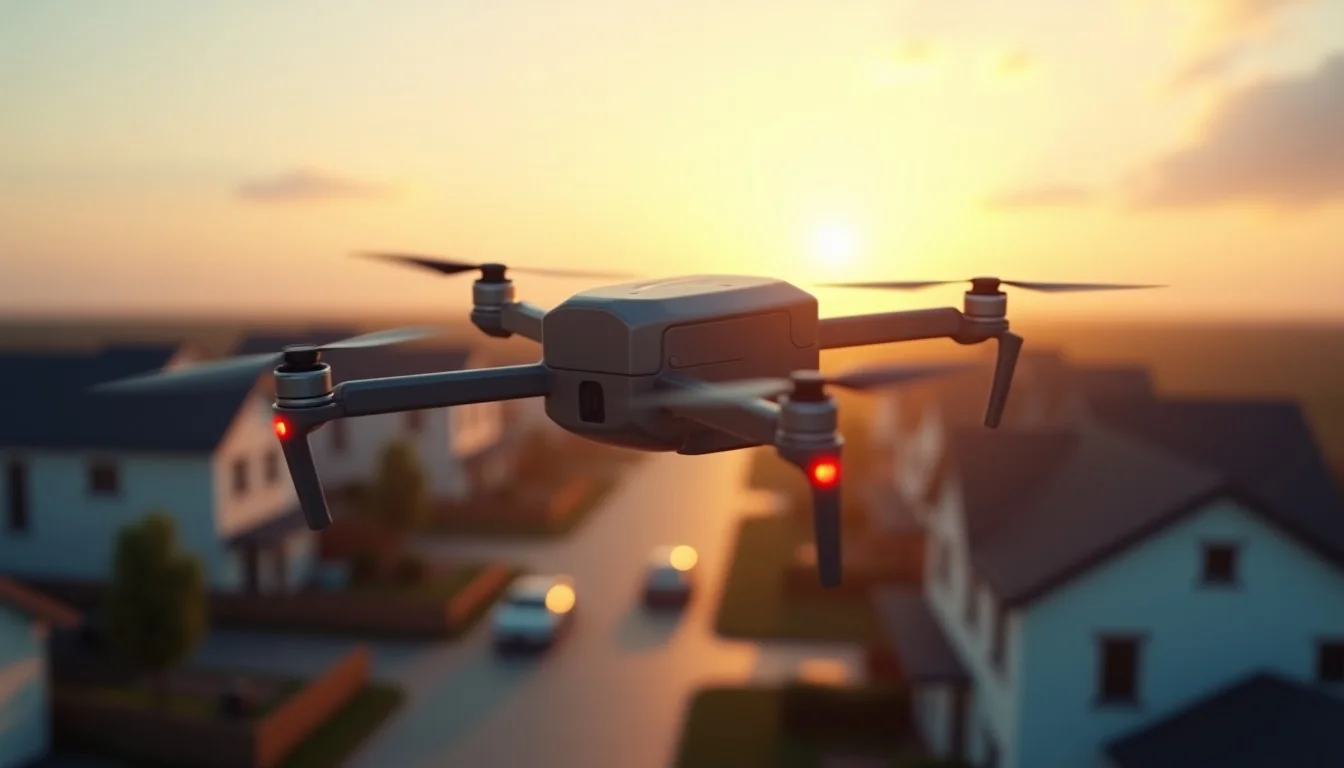
The Federal Aviation Administration has taken a decisive step toward mainstreaming commercial drone delivery. Industry reporting from early July 2026 indicates that the agency has granted full regulatory approval for beyond-visual-line-of-sight (BVLOS) autonomous operations specifically for certified delivery drones. This framework removes one of the most significant remaining barriers that have kept large-scale package and medical deliveries in pilot or limited-waiver mode for years.
For FAA Part 107 remote pilots and the businesses that rely on them, the development is more than regulatory news—it is a signal that the commercial UAS market is entering a new phase of predictable scaling, with direct implications for operations, training, partnerships, and competitive positioning.
What the Approval Changes
Previously, routine BVLOS flights for delivery typically required individualized waivers, exemptions under Section 44807, or experimental certificates, often with requirements for visual observers or other mitigations. The new approval establishes a standardized pathway for operators who meet defined aircraft certification and operational standards.
Key elements include a dedicated FAA airworthiness category for delivery drones. Aircraft must incorporate:
- Redundant flight control systems for reliability.
- Automatic collision avoidance using both radar and optical sensors (detect-and-avoid or DAA technology).
- A parachute-based fail-safe system that deploys automatically if propulsion is lost.
- Robust geofencing to prevent entry into restricted or unauthorized airspace.
These requirements address core safety concerns around mid-air collisions, loss of control, and airspace integrity while enabling operations without constant visual line of sight or ground observers in approved scenarios.
The approval applies to certified operators using approved aircraft models in designated airspace corridors. It takes effect in a phased manner, with initial focus on operators already positioned through prior testing and waivers.
Major Players and 2026 Expansion Plans
Three companies have been highlighted as having secured operator certification under the framework:
- Amazon Prime Air: Plans to launch or expand service in five cities by September 2026, scaling to 40 cities by year-end. The company’s MK30 drone offers a 15-mile range and up to 5-pound payload capacity, covering an estimated 80% of typical e-commerce delivery volume. Amazon has publicly targeted serving communities with 30 million customers by the end of the year and hundreds of millions of packages annually by the end of the decade, with per-delivery costs now in the range of several dollars.
- Wing (Alphabet subsidiary): Building on existing limited-market operations (including Walmart partnerships in states such as Texas, Arkansas, Georgia, Arizona, and Virginia), Wing intends to add service in approximately 20 additional cities. Average delivery times in current operations are reported under 19 minutes for qualifying items.
- Zipline: Focused primarily on medical and healthcare logistics, the company plans to expand its reach to 30 hospital systems nationwide. Zipline has demonstrated strong unit economics in prior deployments and secured significant contracts, including international medical delivery work.
These expansions build on Amazon’s earlier 2026 statements about ramping up Prime Air capacity and broader industry trends showing drone delivery costs dropping dramatically from early pilot figures above $15 per delivery to around $3.50 with current-generation aircraft.
Traditional logistics giants such as UPS and FedEx maintain their own drone programs but have generally lagged in achieving the same level of certification readiness for scaled BVLOS delivery. The U.S. Postal Service has explored drone applications for rural routes, where the economics of bypassing long truck drives are particularly compelling.
Implications for Part 107-Certified Drone Pilots
Part 107 certificate holders are not automatically qualified to command autonomous delivery fleets, but the ecosystem growth creates multiple concrete entry points and adaptation requirements:
New Business and Career Pathways
- Operations support and oversight roles: Even highly autonomous systems benefit from remote human monitoring, exception handling, and safety supervision. Control center positions or field support roles often value Part 107 knowledge.
- Infrastructure and corridor services: Mapping, 3D modeling, and ongoing inspection of delivery corridors, potential vertiport or landing zone infrastructure, and surrounding airspace.
- Niche and complementary services: Rural or medical last-mile deliveries in areas underserved by the big three; data services for fleet optimization; or public-safety integration (e.g., disaster medical resupply).
- Training and compliance consulting: Demand will rise for pilots and companies that can help operators navigate the new standards, conduct internal audits, or train ground teams.
- Partnerships and subcontracting: Larger operators may seek local expertise for specific markets or supplemental missions.
Compliance and Operational Considerations
Pilots and operators should familiarize themselves with the new aircraft certification standards and geofencing/DAA expectations. While the approval provides clarity, individual operations may still intersect with existing Part 107 rules, manned aviation traffic, or local ordinances regarding noise and privacy. Remote ID remains mandatory, and increased commercial density will likely draw more FAA attention to compliance in active delivery zones.
Public acceptance remains a variable—surveys show strong interest in convenience for urgent items but notable concerns about flights over private property, noise, and privacy (cameras on delivery drones are typically disabled except for navigation per regulatory expectations). Operators and supporting pilots will need to navigate community engagement carefully.
Training and Knowledge Gaps to Address
The emphasis on redundant systems, multi-sensor DAA, and automated recovery suggests value in supplemental education on these technologies, even for pilots not directly flying delivery missions. Awareness of how delivery corridors are designated and deconflicted with other UAS and manned traffic is increasingly important for any commercial operator sharing the airspace.
Challenges and Realistic Outlook
Scaling is not without hurdles. Noise impacts in urban and suburban areas, energy consumption of large fleets, and integration with air traffic control systems will require ongoing regulatory attention and technological refinement. Public pushback in specific communities has already led to pauses or adjustments in early programs (e.g., noise complaints in certain Arizona operations historically).
Economically, while costs have improved, proving consistent profitability at massive scale across diverse geographies and weather conditions remains an industry focus. Environmental benefits (lower carbon per delivery versus trucks for short routes) are cited positively, but holistic lifecycle analysis continues.
For Part 107 pilots, the message is one of opportunity tempered by the need for continuous adaptation. This approval does not eliminate the value of waivers for non-delivery BVLOS use cases (inspection, agriculture, public safety) or hybrid operations. It does, however, accelerate the professionalization of the sector.
Actionable Next Steps for Pilots and Operators
- Monitor official FAA communications and the UAS Integration Office for detailed implementation guidance, approved aircraft lists, and corridor designations.
- Review or pursue advanced training on DAA systems, BVLOS best practices, and specific platform familiarization.
- Assess local market gaps—particularly rural medical, pharmacy, or time-sensitive logistics—that could support independent or partnered services.
- Strengthen relationships with public safety agencies; many are expanding drone programs and may value integration with delivery capabilities during emergencies.
- Evaluate insurance coverage and risk management in light of higher-density operations and new tech requirements.
- Participate in industry forums, such as the Commercial UAV Expo (which is featuring FAA/EASA BVLOS discussions in 2026), to stay ahead of regulatory and technical developments.
The skies are opening for routine autonomous delivery at scale. Part 107 pilots and the service providers who employ them who position themselves thoughtfully—through expertise, partnerships, or niche specialization—stand to benefit from one of the most significant expansions in commercial drone history. Those who treat the approval as a starting line rather than a finish line will be best prepared for what comes next.
This article is based on reported FAA regulatory developments in July 2026 and publicly available company expansion plans. Specific operational details, approved aircraft models, and corridor procedures may evolve; operators should consult current FAA guidance and legal counsel for mission-specific planning.