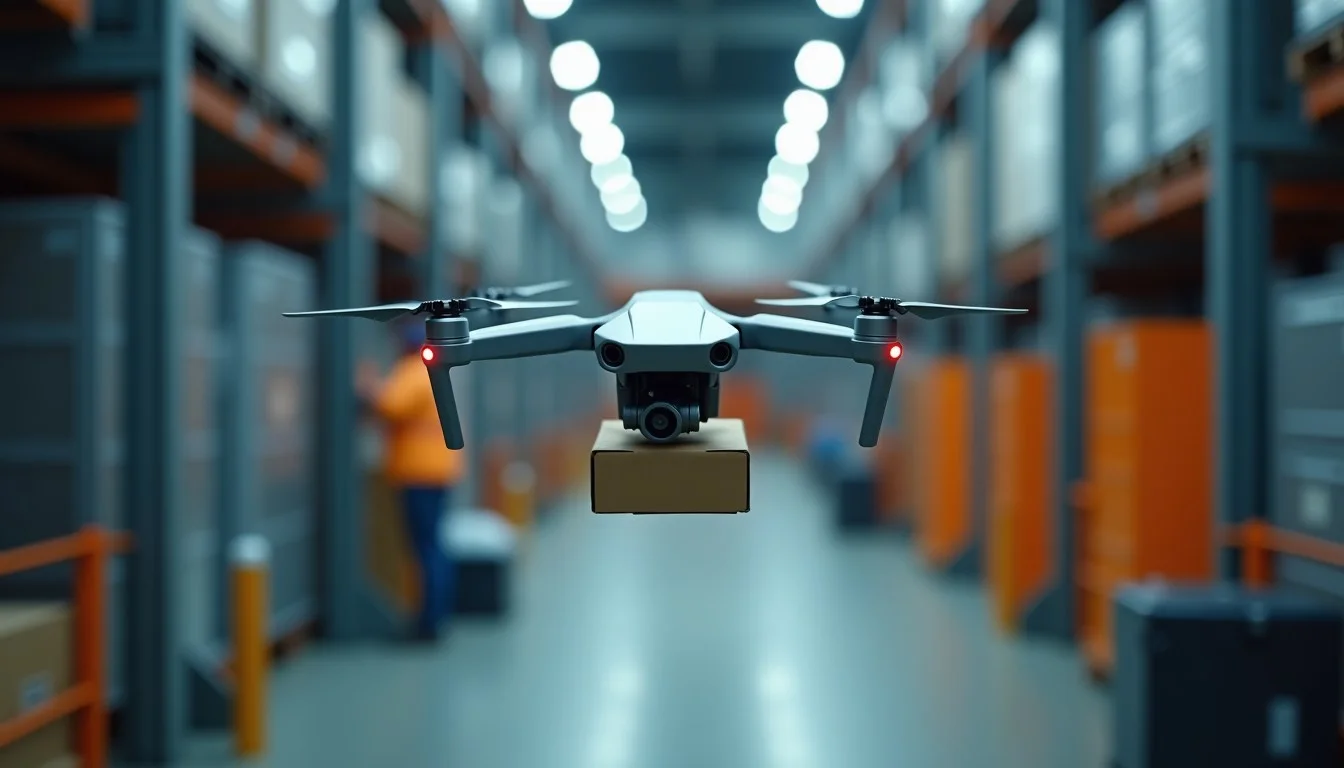
FAA Clears Nationwide Path for Part 135 Drone Package Delivery with July 28 FONSI
On July 28, 2026, the Federal Aviation Administration signed a Final Programmatic Environmental Assessment and Finding of No Significant Impact/Record of Decision covering commercial drone package delivery operations conducted under 14 CFR Part 135. The decision applies across the United States, including Alaska and Hawaii.
For the first time, Part 135 operators no longer face a separate, months-long environmental assessment for every new market. Instead, they can tier their Operations Specifications (OpSpecs) amendments from this single national analysis—provided the proposed operation stays inside the noise, altitude, weight, and siting envelope defined in the PEA.
What the FONSI Actually Changes
Before this decision, the FAA completed more than 20 individual environmental assessments for drone delivery proposals between late 2021 and mid-2025. Each typically required six to eight months and sometimes stretched to a full year. Those reviews gated every expansion of Amazon Prime Air, Wing, Zipline, Matternet, Flytrex/Causey, DroneUp, and others.
The programmatic approach does not eliminate environmental review. Proposals that exceed the national limits still trigger supplemental analysis. Consultations with State Historic Preservation Officers and the U.S. Fish and Wildlife Service continue on a case-by-case basis until broader programmatic agreements are in place. Operators must still hold a Part 135 air carrier certificate and obtain the specific OpSpecs amendment for each operating area.
The Operational Envelope
According to the assessment and contemporaneous technical summaries, the core limits that keep an operation under the FONSI include:
- A capacity threshold of approximately 1,150 average annual day deliveries per hub (roughly 2,300 overflights). Above that level, noise-sensitive areas risk exceeding a 1.5 dB increase in 65 dB zones.
- A 183-meter (600-foot) setback from homes and other noise-sensitive land uses when the hub operates at full capacity. Shorter proportional setbacks apply for lower volumes.
- Cruise altitudes between 46 and 114 meters (150–375 feet) under a 122-meter (400-foot) en-route ceiling.
- Maximum aircraft weight with package of about 50 kilograms (110 pounds). Most current delivery drones operate well below this.
- Measured noise data for the specific aircraft must be submitted with each application to confirm it fits the assessed noise curve.
- Additional geographic avoidances: no hubs within 0.8 km of certain National Register historic sites that require a quiet setting; a 305-meter avoidance bubble around known bald eagle nests; and seasonal altitude minima over potential manatee habitat in coastal areas.
These constraints function as a practical “social contract.” Operators who respect them gain speed; those who cannot must pursue narrower supplemental reviews.
Part 135 Remains the Delivery Framework for Now
The FONSI explicitly notes that package delivery continues under Part 135 until a final Beyond Visual Line of Sight rule (commonly referred to as Part 108) is issued and implemented. As of early August 2026, that final rule has not been published. Industry estimates place routine Part 108 delivery operations one to two years after the rule’s issuance, potentially pushing broad normalization into 2027 or 2028.
Part 135 therefore continues to demand full air-carrier standards: Safety Management Systems, formal maintenance programs, crew training and qualification, hazardous-materials handling, and rigorous FAA oversight. For remote pilots, that means higher professional expectations—and correspondingly higher operational reliability—than typical Part 107 work.
Concurrent Momentum: DoorDash Air Joins the Part 135 Club
Just one day after the FONSI signature, DoorDash announced that DoorDash Labs had earned Part 135 air carrier certification, becoming the eighth U.S. drone operator to clear that bar. The company is launching DoorDash Air as an in-house program built around an American-designed and primarily U.S.-sourced aircraft. It plans to begin commercial deliveries in the fall of 2026 while continuing partnerships with existing operators such as Wing and Flytrex.
DoorDash’s move illustrates the practical effect of regulatory streamlining: established logistics platforms are now investing in full-stack control of aircraft, ground infrastructure, and merchant handoff systems rather than remaining purely dependent on third-party aviation partners.
Implications for FAA-Certified Remote Pilots
The combination of a nationwide environmental clearance and continued Part 135 growth has several concrete consequences for working remote pilots and small commercial operators:
- Increased demand for qualified personnel. Scaling multi-hub networks requires remote pilots, visual observers where still used, maintenance technicians, and safety managers who understand air-carrier SMS and Part 135 procedures.
- Denser low-altitude activity. More routine BVLOS delivery corridors increase the importance of continuous Remote ID compliance, LAANC awareness, and real-time traffic deconfliction skills.
- Business opportunities at the edges. Independent Part 107 operators and contractors can find work in hub siting studies, noise measurement campaigns, local community liaison, pilot training, and ground-support logistics.
- Career pathway clarity. Experience supporting or flying under Part 135 operators remains one of the clearest routes toward higher-responsibility roles in the expanding commercial UAS sector while the industry waits for Part 108.
The 60-day window for petitions for review of the FONSI under 49 U.S.C. § 46110 closes in late September 2026. Unless successfully challenged in federal court, the framework stands as the baseline for Part 135 delivery expansion for the foreseeable future.
For certificated pilots, the message is straightforward: the regulatory runway for commercial drone delivery just got longer and clearer. The operators that stay inside the envelope—and the pilots who help them do so safely—will define the next phase of the industry.