 Robert Rahm |
November 4, 2026
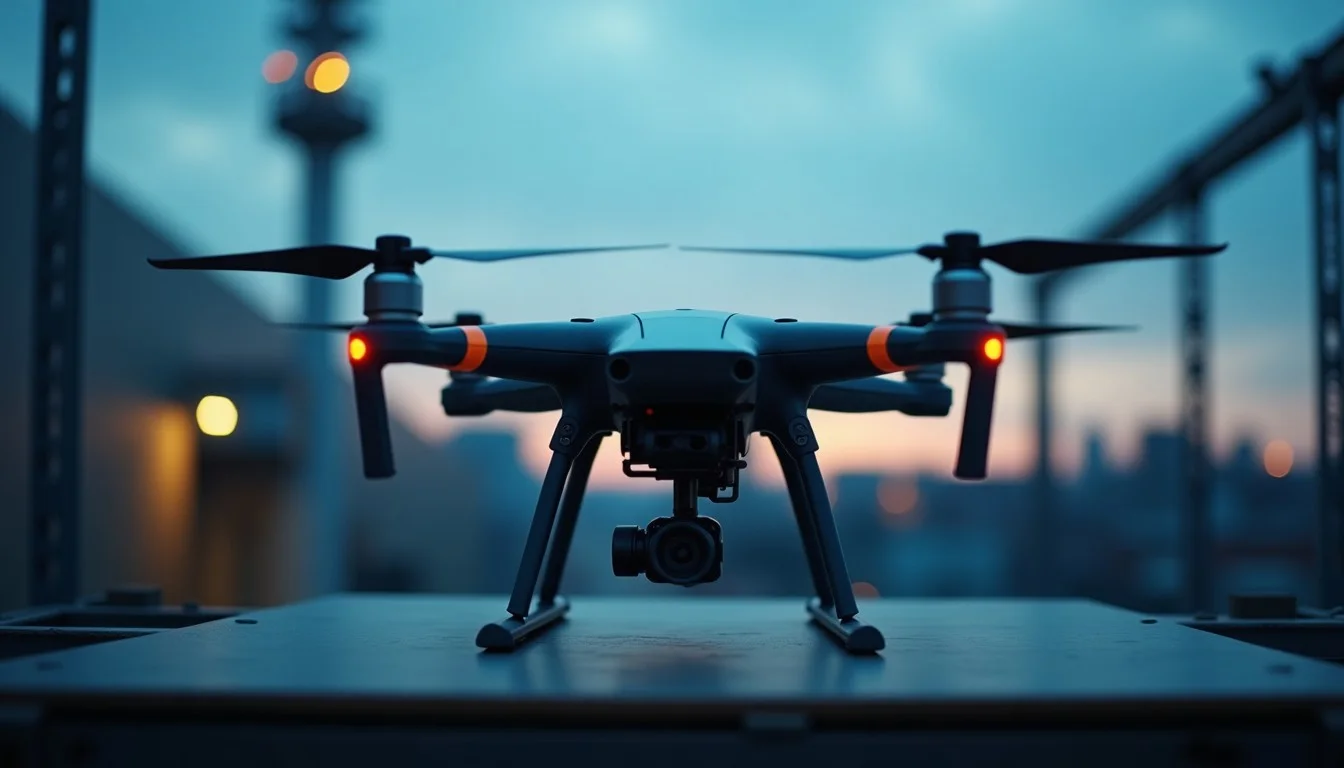
The Federal Communications Commission on October 2 took one named foreign drone and its dock off the Covered List. Public Notice DA 26-1063 says the Department of War granted a conditional approval for Dronus S.p.A.’s K500L uncrewed aircraft system and the associated K500L docking station, Nest V2. The Public Safety and Homeland Security Bureau then updated the Covered List. The same notice also covers routers and a robotic floor cleaner. Those lines are not flight hardware.
The Covered List is the FCC’s register of equipment the government has decided poses an unacceptable risk to national security or to the safety of U.S. persons. On December 22, 2025, the bureau added UAS and UAS critical components produced in a foreign country. New equipment authorization is the practical choke point. A remote pilot can hold a current Part 107 certificate and still be unable to import, market, or newly authorize a radio, aircraft, or critical component that sits on that list.
DA 26-1063 is the bureau doing what it said it would do in the December notice: if the Department of War or the Department of Homeland Security makes a specific determination that a given UAS or component does not pose an unacceptable risk, the list gets updated. The October 2 Covered List page now shows the K500L and Nest V2 as approved that day. The notice says approvals of this type that do not carry a termination date stay in effect indefinitely, but only while the company follows the onshoring plan in its application and the products remain subject to updated vetting. A missed onshoring step, or a false statement in the application, ends the approval and puts the equipment back on the list.
That is a narrower gift than a vendor slide will imply. “Dronus” is not the approved article. The K500L is. “NEST” is the company’s name for an elevated docking node; the FCC string is the K500L docking station, Nest V2. A later airframe, a different dock revision, or a radio module that was not in the submission is still foreign-produced UAS equipment unless it has its own approval, sits on the Blue UAS Cleared List, or qualifies as a domestic end product. Those last two exemptions currently run to January 1, 2028, not forever.
Dronus, an Italian company, describes NEST as a pole- or structure-mounted dock and markets an EASA design-verification claim for one configuration. None of that is in the FCC notice, and none of it is an FAA authorization. Part 107 still caps a standard commercial flight at visual line of sight and 400 feet above ground level, with the usual airspace, night, and operations-over-people limits unless a separate waiver says otherwise. Remote ID and registration are unchanged. A dock that can launch without a pilot on the pad does not become a Part 107 visual-line-of-sight operation because its radio cleared a supply-chain review.
For a contractor, the paper is a procurement check, not a mission card. If a client wants a Dronus dock on a fence line or a tower, the equipment schedule should name the K500L and Nest V2, ask who holds the coming FCC ID, and state what happens if the conditional approval is revoked. Flight authority stays in the aviation file: remote pilot certificate, aircraft registration, Remote ID, LAANC or airspace authorization, and any waiver the job actually needs. Do not borrow a dock waiver issued to another company. The October 2 notice does not create one.
The bureau’s contact on the notice is Emma Sameth. The docket line is WC Docket 18-89, with GN Dockets 21-232 and 21-233. The list of conditional approvals lives on the Covered List page, which the FCC marked updated Friday, October 2, 2026.