 Bob Rahm |
September 24, 2026
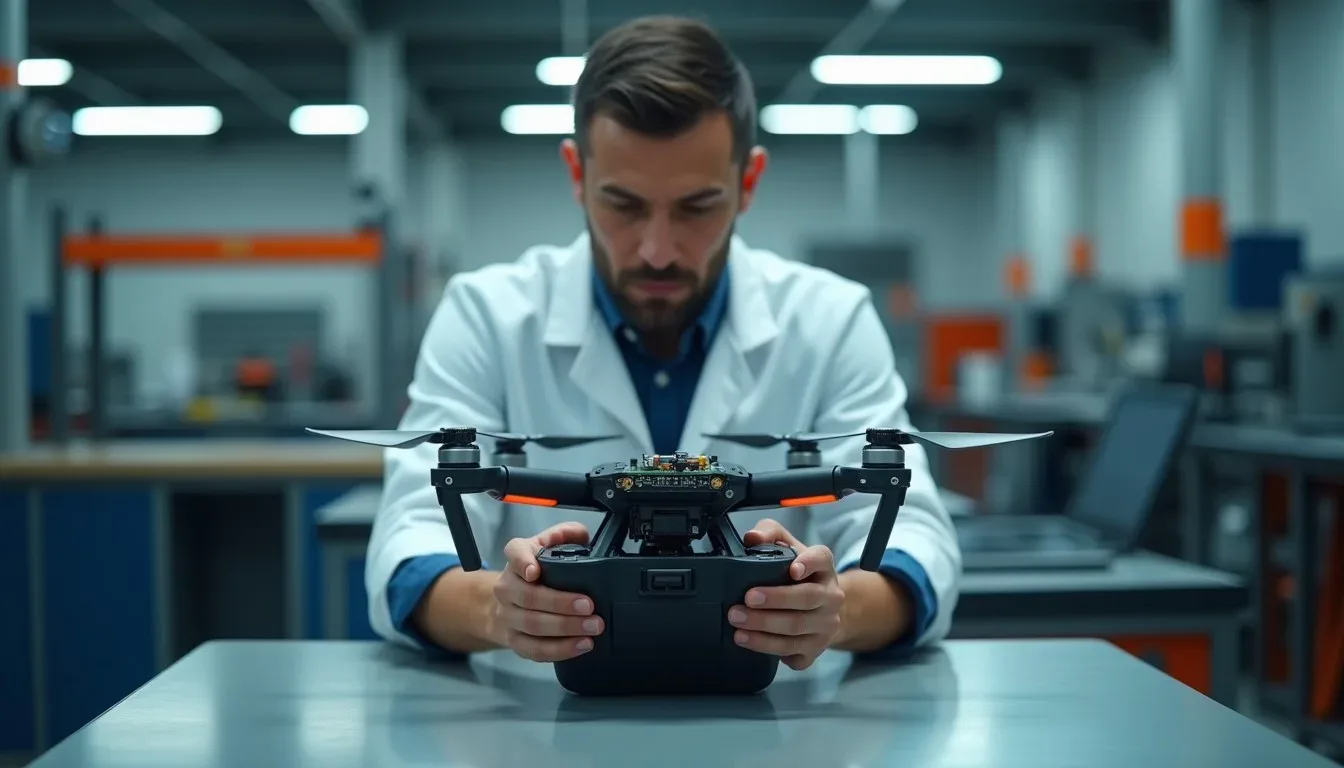
The Federal Communications Commission is about to treat the board inside a US-built drone the same way it already treats a drone built by the company that made the board.
On October 13, 2026, the Commission’s Third Report and Order in ET Docket No. 21-232 takes effect. The order — FCC 26-50, published September 11 at 91 FR 57798 — prohibits a new equipment authorization for any radio device that incorporates a “logic-bearing hardware component” produced by an entity identified on the Covered List, if the device itself would have been refused had that listed company built the whole thing.
For the commercial drone market the listed names that matter are DJI and Autel. After October 13, an aircraft designed and assembled in the United States cannot receive a new FCC authorization if one of those companies produced the flight controller, the radio module, the camera board, or another logic-bearing part inside it.
That is not a flight ban. It is an authorization ban that runs forward.
What the Commission actually adopted
The Commission voted the order on July 22 and released it July 23. The Federal Register text is a final rule with an effective date of October 13, 2026.
The Commission’s own summary is short. It “closes a component-part loophole by prohibiting authorization of devices that incorporate logic-bearing hardware components produced by an entity identified on the Commission’s Covered List, where the device would itself be prohibited from authorization had the Covered List entity produced the entire device.”
The definition of the part is borrowed from the Commission’s existing “digital device” language in 47 CFR § 15.3(k). A logic-bearing hardware component is any device, system, module, sub-assembly, integrated circuit, or other physical component that generates and uses timing signals above 9,000 pulses per second and uses digital techniques, or that uses radio-frequency energy to compute, store, or move data.
Flight controllers sit inside that sentence. So do radio modules, camera boards, gimbal controllers, motor-controller boards with embedded digital timing, cellular or Wi-Fi chipsets, and battery-management boards that actually process data. Housings, fasteners, resistors, wiring, connectors, and a plain battery cell with no digital management sit outside it.
The rule does not ask whether the component itself radiates. The Commission’s rationale is that a listed logic-bearing part can present the same national-security risk as a listed finished device.
The transfer test, not a country-of-origin sticker
The December 22, 2025 Covered List update (DA 25-1086) added “uncrewed aircraft systems and UAS critical components produced in a foreign country,” plus the equipment named in section 1709 of the FY2025 NDAA. That listing is about production location and named companies. It is why a new DJI or Autel model cannot get a fresh US equipment authorization.
FCC 26-50 is about the company that produced a part. The component ban attaches to entities named on the Covered List. It does not, by itself, attach to every unnamed factory in Shenzhen. An anonymous flight controller from a supplier that is not on the list is a different legal object than a DJI-produced board, even if both were fabricated in the same city.
That asymmetry is the point of the transfer test and also its limit. The Commission is using the corporate name as a proxy. A US assembler that can document a non-listed controller still has a path. A US assembler that dropped a DJI stack into a domestic carbon frame does not, once October 13 arrives, if it needs a new authorization.
What does not change on October 13
Existing authorizations are not revoked by this order. A Part 107 remote pilot who already flies an authorized DJI, Autel, or hybrid airframe does not lose the right to operate that aircraft under Part 107 because FCC 26-50 became effective.
Applications already pending before the FCC or a Telecommunication Certification Body on October 13 are exempt from the new component test. That exemption dies if the applicant later amends the filing to add, substitute, or change a logic-bearing hardware component.
Software and firmware are not the subject of this order. A separate Public Notice, DA 26-454, lets already-authorized covered drones, components, and certain routers keep receiving software and firmware updates — including Class I and Class II permissive changes — until at least January 1, 2029.
Federal and grant-funded procurement rules are also a different statute. The American Security Drone Act and the state buying bans that stack on top of it already limit who may purchase listed aircraft with public money. Those rules did not wait for October 13. They also do not answer whether a private contractor may keep flying an already-authorized aircraft on a private roof job.
Blue UAS and Buy American are not a free pass for a listed board
The Commission’s UAS Covered List FAQs still say a UAS produced in the United States that complies with the Department of War Blue UAS Cleared List, or that meets the Buy American domestic-end-product test, “shall not be considered covered” under the production-location listing.
FCC 26-50 sits on top of that answer. A Blue UAS airframe stays off the production-location list. A Buy American airframe that clears the 65-percent domestic-content line stays off that list too. Neither exemption rewrites the transfer test for a named Covered List company’s logic-bearing part. A single DJI-produced controller in the remaining 35 percent of a “domestic” bill of materials is still a listed component inside a device that would have been refused if DJI had built the whole aircraft.
Public Notice DA 26-761 extended the Blue UAS and Buy American categorical dates. It did not repeal FCC 26-50.
How this differs from the other live FCC drone fights
Three instruments get collapsed into “the ban” in trade conversation. They are not the same paper.
- DA 25-1086 (December 22, 2025). Added foreign-produced UAS and UAS critical components, and the FY2025 NDAA section 1709 names, to the Covered List. Blocks new authorizations, importation, and marketing of those items.
- FCC 26-50 (effective October 13, 2026). Blocks new authorization of any radio device that contains a listed company’s logic-bearing hardware, including a US-assembled drone. Prospective. Existing grants stand.
- PS Docket No. 26-189. A separate proposal that would restrict import and marketing of already-authorized foreign drones in seven capability categories the Commission calls military-grade, including aircraft 55 pounds and up, agricultural sprayers, thermal, LiDAR, docks, defense-article carriers, and swarming systems. That docket is not the October 13 rule.
Section 232 tariffs that took effect September 3, 2026, are a customs instrument, not an equipment-authorization instrument. A 25 percent or 100 percent duty can change the price of a replacement airframe. It does not decide whether the FCC will grant a new grant of authorization.
What a Part 107 shop should do before October 13
Treat the next capital purchase as a radio-authorization problem, not a brand-preference problem.
- Inventory the fleet by authorization, not by marketing name. Record manufacturer, model, FCC ID if the aircraft or module carries one, serial, Remote ID method, and whether the airframe was authorized before December 22, 2025. The Remote ID audit already used on Drone.Contractors is the right skeleton.
- Ask any US vendor quoting a “domestic” aircraft to state, in writing, whether any logic-bearing hardware was produced by an entity on the Covered List. “Assembled in the United States” is not an answer to that question.
- If you are a small OEM or an integrator filing for authorization, file before October 13 if the design still contains a listed board and you intend to keep that board. After the effective date the transfer test applies to a new filing. An amendment that swaps the board later also pulls the application out of the grandfather.
- Separate spare-parts planning from new-model planning. An already-authorized aircraft can still receive firmware under DA 26-454 through at least January 1, 2029. A new model that needs a new grant cannot carry a listed logic-bearing part after October 13.
- For public-safety and federal-funded work, stack the radio rule on the procurement rule. A city that cannot buy DJI with federal funds was already in that position. After October 13 a US vendor cannot paper over that problem by dropping a DJI board into a domestic shell and calling the result a new authorized product.
Odyssey Robot’s authorizations were revoked on August 11, 2026, after the Commission concluded the company had used a US-assembly story to move listed hardware. That enforcement action is not FCC 26-50, but it is the preview of how the agency reads a bill of materials when the paperwork and the board do not match.
The remaining open proceeding
The same item that adopted the October 13 rule also asked more questions. The Third Further Notice sought comment on whether applicants should file a hardware and software bill of materials with every equipment-authorization application, and whether the prohibition should reach all components from listed entities rather than only logic-bearing hardware. Reply comments in that further notice were due September 21, 2026.
Until the Commission acts on that further notice, the bright line for new grants is the logic-bearing definition in FCC 26-50, effective October 13. It is narrower than a total-component ban and wider than a finished-aircraft ban.
A working pilot does not need to litigate the national-security finding to use the date. The finding is in the order. The date is on the Federal Register page. The aircraft already on the truck is a different legal object from the aircraft a vendor wants to authorize next month.
FAQ
Does FCC 26-50 make it illegal to fly a DJI or Autel drone on October 13? No. The order refuses new equipment authorizations for devices that contain a listed company’s logic-bearing hardware. It does not revoke existing grants and it does not amend 14 CFR Part 107.
Can a US company still get FCC authorization for a drone it assembles here? Yes, if the logic-bearing hardware is not produced by an entity on the Covered List, or if another independent exemption actually covers that device. A US address on the frame is not enough if a listed company produced the controller or radio.
What is a logic-bearing hardware component? The Commission’s definition covers modules, sub-assemblies, integrated circuits, and other physical parts that generate and use timing signals above 9,000 cycles per second and use digital techniques, or that use RF energy to compute, store, or transfer data. Flight controllers, radio modules, and camera boards are in. Fasteners and plain wiring are out.
Are applications already in the queue safe? Applications pending on October 13 are exempt from the new component test. An amendment that adds, substitutes, or changes a logic-bearing component ends that exemption.
Is this the same as the FCC “military-grade” drone proposal? No. That proposal lives in PS Docket No. 26-189 and would reach import and marketing of certain already-authorized foreign drones. FCC 26-50 is a final rule with an October 13 effective date.