 Robert Rahm |
September 30, 2026
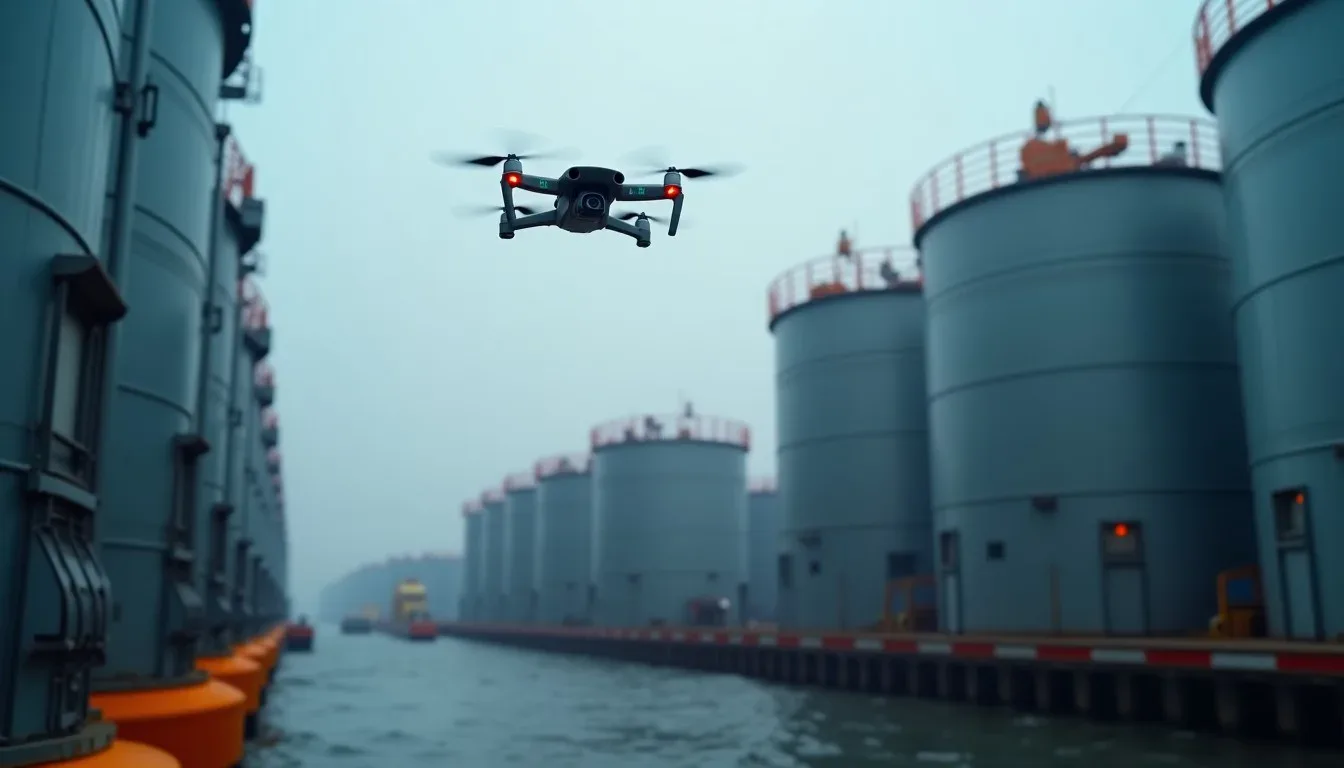
The FAA’s issued-waiver table added a row today that working pilots should read before the next industrial bid.
Percepto Robotics Inc., 7201 Haverhill Business Parkway, Riviera Beach, Florida, is the holder. Raviv Raz is the responsible person. The number on the certificate is 107W-2026-02228. It is effective September 30, 2026, and it expires August 31, 2028. The public PDF is the amendment copy posted as 107W-2026-02228-A.
Five sections of Part 107 are waived, and only those five:
- § 107.31, so the small unmanned aircraft may operate beyond the remote PIC’s direct visual line of sight.
- § 107.33(b) and (c)(2), so a participating visual observer may work even when that observer cannot see the aircraft the way § 107.31 normally requires.
- § 107.35, so one person may act as remote PIC or visual observer for multiple small UAS at the same time.
- § 107.39, so the aircraft may fly over human beings who are not direct participants.
- § 107.145, so the aircraft may fly over a moving vehicle.
Everything else in Part 107 stays in force. Registration, Remote ID, airspace authorization, see-and-avoid residual duties, drug and alcohol rules, and the 400-foot ceiling unless a listed profile and a UAS Facility Map say otherwise.
What the aircraft must be
This is a make-and-model waiver. Operations are limited to the sUAS and the docking station named in the application. A different airframe or a different dock needs a new filing or an amendment.
Maximum takeoff weight is 24 pounds. Rotating-component shielding, or another system that prevents lacerations to human skin, is required. Anti-collision lighting that meets § 107.29 must run on every flight. The aircraft must be a Standard Remote ID unmanned aircraft on the FAA-accepted declaration-of-compliance list unless the Administrator writes a separate authorization.
ADS-B Out on 1090 or 978 MHz is forbidden. An ADS-B In receiver that is not a cell phone and is not a third-party internet feed must be on and monitored for every operation.
An independent flight-termination system must be able to recover the aircraft inside the defined operational area if command and control fails. Flight termination and geofencing have to be verified before each flight. A parachute recovery system that complies with ASTM F3322-18, as revised, must be operational. The aircraft may not fly below that system’s minimum deployment height. If the parachute fires, the manufacturer or a designated representative must repack it before the next waiver flight. Within the seven calendar days before operations, the responsible person and the remote PIC must confirm the parachute has no known safety defect.
No design substitutions. Repair parts must match the original.
How many aircraft, and who watches them
Up to thirty aircraft of the approved make and model may be controlled and monitored through the specified flight-management system.
The visual-observer waiver does not delete observers. It changes how they look. The certificate still requires enough observers to watch at least a two-statute-mile radius of airspace around the aircraft in flight. Their job is to see non-participating aircraft before those aircraft enter the planned volume, to give the remote PIC time to remain well clear, and to call moving vehicles or people who become a hazard.
If the PIC and observer talk by electronic device, the link must be continuous full-duplex, the PIC must be able to use it hands-free, and a reliable backup method is required. Observer training has to be documented: scan technique, phraseology, and the operations this waiver actually authorizes.
Over people and over traffic
Overflight of non-participants and moving vehicles must be transitory. The certificate defines “sustain” as loitering, hovering, or continuous or sequential overflight. Sustained operations over non-participants or moving vehicles are prohibited. Open-air assemblies are prohibited. Routes must be designed to avoid people and traffic areas.
That is the difference between a docked inspection pass across a plant road and a hover over the parking lot during shift change. The first can fit the waiver. The second does not.
Three altitude profiles
The certificate writes three flight profiles. UAS Facility Map grid heights take precedence unless the FAA authorizes something else, and nothing in the profiles raises the Part 107 400-foot AGL cap.
Low-altitude linear shielding: 100 feet AGL, or 100 feet above an object within 200 feet to the side of the flight path and 500 feet ahead, not above 400 feet AGL.
Client fixed sites: not above 200 feet AGL, or 200 feet above an object within 200 feet, or 50 feet above an object within a half-mile, still not above 400 feet AGL.
Non-shielded: not above 400 feet AGL.
Controlled airspace still needs an authorization. The waiver is not a LAANC substitute.
What this means on a shared site
A Part 107 contractor who already inspects tanks, corridors, or yards for the same owner should assume the docked fleet can now legally cover more of that site without a PIC standing at the pad. The contractor’s remaining value is the work the waiver still cannot do: open-air assemblies, sustained hover over people, a different airframe, a night profile this certificate does not grant by its face, flights above the listed shielding numbers, or any job outside the approved CONOPS.
If the owner asks you to “just use their dock,” ask for the certificate number, the responsible person, the make and model list, the dock list, the observer roster, the ADS-B In receiver (not a phone), the parachute pack date, and the UASFM grid. If those answers are missing, you are not on this waiver.
If you are hired as a visual observer or as a PIC under Percepto’s certificate, you fly their special provisions, not a generic Part 107 template. Document the training. Keep the backup comms. Do not treat a cell-phone traffic app as the required ADS-B In receiver.
Part 108 is still in White House review. This waiver is how docked inspection is being flown in the meantime, one named operator at a time.
What to do this week
- Pull the PDF from the FAA issued-waiver page and save 107W-2026-02228 against the sites you already fly in Florida and other Percepto customer yards.
- Add “docked fleet on site” to the preflight questions you ask a plant or utility client.
- If you bid linear corridor work, price the shielded 100-foot profile and the two-mile observer ring. That is the shape of the competing operation.
- Keep your own Remote ID declaration, registration, and observer training current. Those un-waived rules are how you stay employable next to this fleet.
The certificate can be canceled on notice. Until then it is the operating law for those thirty docks.
Frequently Asked Questions
Does this waiver let any Part 107 pilot fly BVLOS from a dock?
No. It is issued to Percepto Robotics Inc. and limited to the aircraft and docking station in that company’s application.
Does § 107.35 now allow every commercial operator to fly 30 drones?
No. Only the holder, and only through the flight-management system named in the waiver.
Is ADS-B Out required?
The opposite. ADS-B Out from the sUAS is prohibited. ADS-B In on a dedicated receiver must be monitored.
Can the aircraft hover over a plant parking lot?
Not as a sustained operation over non-participants or moving vehicles. Overflight must be transitory. Open-air assemblies are prohibited.
Does the waiver replace LAANC or a COA in controlled airspace?
No. Facility-map altitudes and airspace authorizations remain separate.